Hypertherm Plasma Showcases Flexible Robotic Cast Trimming Solution at China Diecasting & China Nonferrous 2026

From July 15 to 17, the 20th Shanghai International Die Casting & Nonferrous Foundry Exhibition (China Diecasting & China Nonferrous 2026) was held at the Shanghai New International Expo Centre. At the event, Hypertherm highlighted the advantages of automated robotic plasma cutting for cast trimming through a demonstration delivered with its robotic integration partner, Suzhou Jintairu Automation Equipment Co., Ltd. The booth combined static displays with dynamic simulation demonstrations to show how plasma cast trimming can help die casting manufacturers improve flexibility, productivity, and process efficiency in post-casting operations.
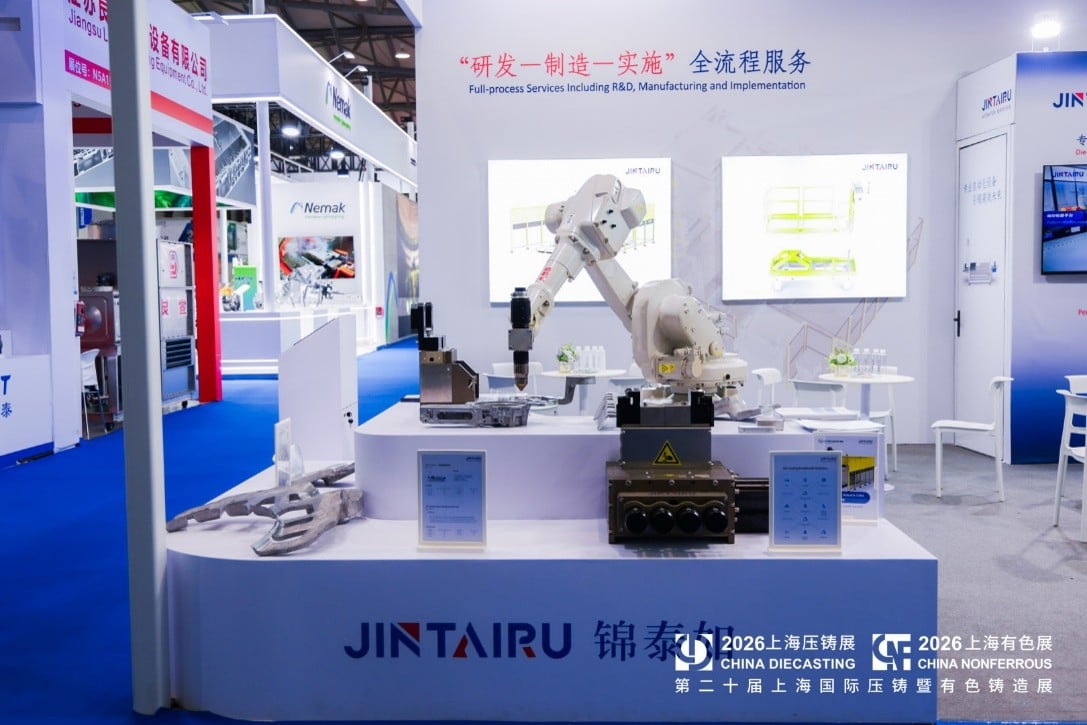
The display attracted strong interest from professional visitors with its robotic casting trimming workstation and a range of application workpieces. From tooling components such as biscuit grippers and cylinder liner fixtures to simulated robotic plasma cast trimming, visitors were able to see how plasma cutting technology can be applied to remove gates, runners, flash, and other excess material from aluminum castings. Equipped with a Hypertherm plasma cutting system and supported by localized robotic integration and process commissioning, the workstation demonstrated how Hypertherm technology can be integrated into automated trimming cells for foundry and automotive applications.
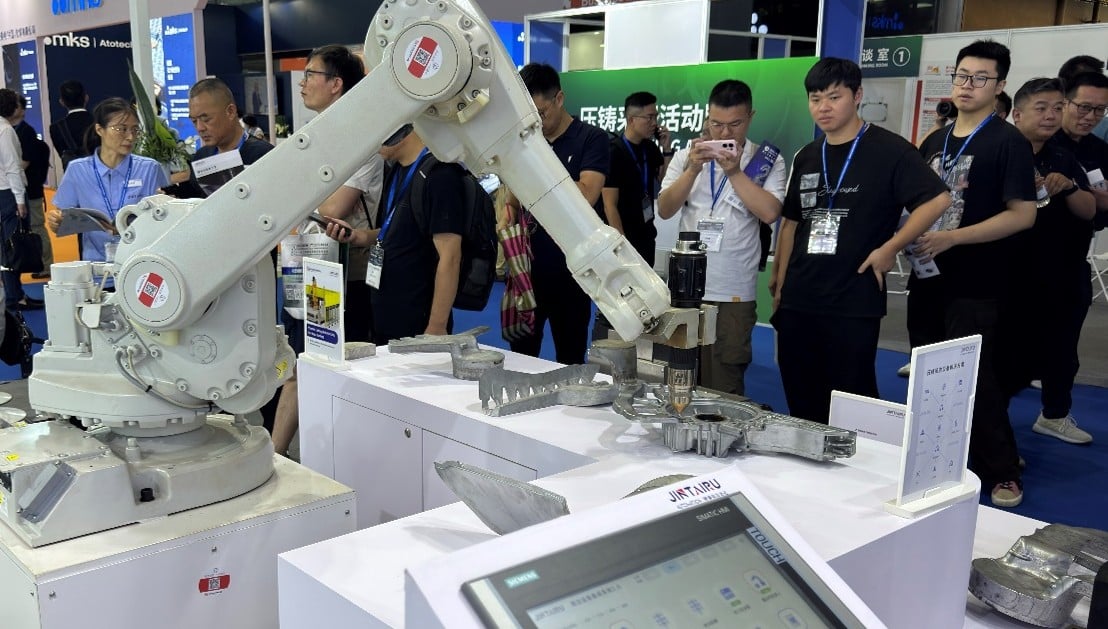
As the new energy vehicle industry accelerates, mega and giga casting are being adopted by more automakers and die casting companies. Part size and complexity are increasing rapidly, while the limitations of traditional trim presses are becoming more apparent, particularly in accessibility, die tooling investment, downtime, and mixed-model production. Robotic plasma cutting offers a flexible, cost-effective alternative: robots can reach difficult-to-access areas such as complex cavities; part programs can be updated quickly without investing in high-precision trim dies for every design change; and robotic plasma trimming cells can help reduce capital cost, improve uptime, and deliver consistent cut quality. The process can also reduce secondary operations, support smaller scrap handling, and help shorten cycle times. Compared with laser cutting, plasma offers a wider cutting thickness range and simpler process adjustments without requiring dedicated high-volume assist gas systems.
During the exhibition, Hypertherm’s robotic aluminum cast trimming application generated discussions with die casting companies serving new energy battery trays, large body structural components, and other aluminum cast products. Many visitors were focused on the need for more flexible post-casting trimming processes — especially how to respond to high-mix, shorter-cycle market demands with lower equipment investment and faster changeovers. Technical specialists discussed specific workpiece requirements, cutting parameters, robotic path planning, and production line integration considerations with attendees.
Hypertherm’s robotic plasma cast trimming solution is designed to help manufacturers address common post-casting challenges, including machining accuracy, production efficiency, part variation, and the difficulty of processing large aluminum castings. By combining Hypertherm’s proven plasma cutting technology with experienced local robotic integration, the solution supports a more flexible approach to trimming automotive body structural components, battery enclosures, and other large cast parts. Hypertherm will continue working with qualified integration partners to help customers in die casting industry improve productivity, reduce reliance on dedicated trim tooling, and accelerate the transition toward smarter, more adaptable manufacturing.
To learn more about Hypertherm plasma cast trimming technology for foundry and automotive applications, please visit https://www.hypertherm.com/solutions/applications/cast-trimming