
Konecranes
"The XPR300 machine combines many processes, like marking, drilling, and bevel cutting. In the old days, these operations were performed at different work stations, which meant the materials were moved a lot from place to place."

Plasma provides multi‑process performance—cutting, beveling, gouging, piercing, and marking—with speed, precision, and reliability across any application. Compatible with steel, stainless, aluminum, copper, and brass, plasma adapts to your workflow with handheld or mechanized systems and easily integrates with CNC, track / carriage, or robotic systems.
Hypertherm plasma delivers fast, precise, and versatile performance across metalworking—handling everything from fine cuts on gauge material to thick plate, including beveling, gouging, marking, piercing, and hole cutting.
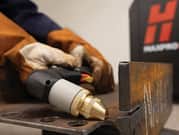
"Our Powermax reduces the time needed to do the job by half. It gets the molds back into production quickly and makes it easier for me to gouge."
Johan Edvard Risnes
Operator, Nordland Betong
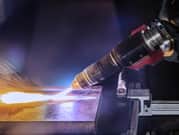
Plasma cutting solutions range from advanced robotic systems for high-performance, flexible automation to cobot-based cutting, offering a safe, cost-effective option for small- to mid-sized shops. Plasma 2D systems deliver reliable, high-quality cutting for light-industrial XY applications. Together, these platforms deliver scalable solutions that balance automation, performance, and cost across a wide range of cutting needs.
High-speed cutting with stable arc performance
Compact, lightweight torches for robotic integration
Long consumable life with cartridge technology
Safe for human collaboration—no guarding needed
Easy to program and redeploy
Consistent, high-quality cuts with minimal rework
Easy setup with flexible CNC integration and torch options
Optimized cut charts for mild steel, stainless, and aluminum
Konecranes
"The XPR300 machine combines many processes, like marking, drilling, and bevel cutting. In the old days, these operations were performed at different work stations, which meant the materials were moved a lot from place to place."
Plasma cutting systems can perform far more than straight-line metal cutting. Common plasma applications include bevel cutting, gouging, flush cutting, cast trimming and degating, hole cutting, marking, fine-feature cutting, scrap and skeleton cutting, and extended-reach cutting. These processes can be completed with handheld equipment or integrated with mechanized systems such as CNC cutting tables, cobots, and industrial robots.
Plasma can process electrically conductive metals, including mild steel, stainless steel, aluminum, copper, and brass. Plasma gouging is also effective on abrasion-resistant steel and other ferrous and non-ferrous metals. Depending on the metal type, thickness, and the desired cut or gouge quality will determine the appropriate plasma system for the application factoring power output, torch type (handheld or machine) and consumables.
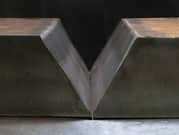
Plasma bevel cutting creates an angled edge rather than an edge that is perpendicular to the top of the metal. Bevels are commonly used to prepare plate, pipe, and structural components for welding because the angled edge increases the available weld area and supports strong, durable joints. Plasma bevels can be produced on-table or off-table with handheld, mechanized, or robotic equipment. Hypertherm has a variety of consumables and cut processes designed exclusively for bevel cutting.
Plasma bevel cutting can, in many applications, produce weld-ready edges faster and with less heat input than many traditional processes. Compared with oxyfuel, plasma generally cuts faster and creates a smaller heat-affected zone, particularly on thinner and medium-thickness materials. Automated process technology can also reduce trial-and-error setup, improve bevel-angle repeatability, lower scrap, and minimize the grinding required before welding.
Plasma gouging uses a controlled plasma arc and high-velocity gas to melt and remove metal without cutting completely through the workpiece. Typical applications include removing defective welds, back gouging weld joints, removing hardfacing, repairing heavy equipment, removing risers and sprues from castings, and preparing surfaces for rewelding. Plasma gouging can be performed manually or automated with a track system, cobot, gantry, or industrial robot. Hypertherm exclusively offers a variety of gouging-specific consumable and cartridges to optimize gouging outcomes.
Plasma gouging typically produces cleaner, more controlled gouges with less noise, smoke, dust, and secondary grinding than carbon arc gouging. Because plasma does not use carbon electrodes, it also avoids introducing carbon contamination into the metal, which requires more grinding for weld prep. Plasma can gouge stainless steel, aluminum, abrasion-resistant steel, and other metals that may be difficult or unsuitable for carbon arc gouging, and it is easier to integrate into automated systems.
Plasma flush cutting removes welded attachments or protrusions close to the surface without damage to the metal. Common applications include removing lifting lugs, pad eyes, temporary supports, bolts, rivets, end caps, casting sprues, and other welded fixtures. Only Hypertherm FlushCut™ consumables bend the plasma arc toward the work surface, helping operators cut closer to the base metal and significantly reduce residual material, grinding, and rework.
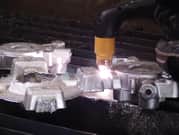
Plasma cast trimming provides foundries and automotive manufacturers with a fast, flexible alternative to hammers, saws, trim presses, and other labor-intensive degating methods. It can quickly remove gates, risers, sprues, and excess material from cast components while improving consistency and reducing operator exposure to strenuous or hazardous manual work. Plasma cast trimming can be performed with handheld systems or automated with cobots and industrial robots for higher throughput and repeatable quality. Hypertherm has engineered cartridge consumables specifically for this process, namely the HyPilot cartridge, to assist with longer consumable life for this specific process.
Yes. Plasma cutting, beveling, gouging, flush cutting, and cast trimming can all be integrated with cobots or industrial robots. Cobots are often well suited to repetitive tasks, smaller production runs, frequent changeovers, and applications where flexibility and ease of deployment are priorities. Industrial robots are commonly selected for complex 3D cutting, demanding production environments, larger work envelopes, and highly automated manufacturing cells. A complete system should be evaluated and discussed with a cobot or industrial robot or a system integrator that partners with Hypertherm.
The best plasma cutting configuration depends on the part geometry, material thickness, production volume, required repeatability, available labor, and the desired level of automation. Handheld systems provide portability and flexibility for repair and variable work. Mechanized CNC table systems are effective for repeatable flat-plate processing. Cobots can automate repetitive or ergonomically challenging work with frequent changeovers, while industrial robots are generally better suited to complex 3D parts and integrated, high-production cells.
Have more questions? Ask a Cutting Pro today!