Job Shops Across Asia Face Growing Demands with Fewer Resources
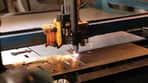
Across Asia, job shops and fabrication businesses are working under rapidly intensifying demands. Customers expect higher cut quality, shorter turnaround times, and competitive pricing, even as supply chain variability and skilled labor shortages continue to affect nearly every manufacturing sector in the region.
These shops typically handle a diverse mix of materials, from mild steel to stainless steel and aluminum, and manage a constant flow of high‑mix, low‑volume work. Production schedules must stay flexible, and workflows must maintain consistency despite fluctuating staffing levels. Under these conditions, traditional cutting technologies bring real limitations, slowing operations and adding complexity.
To stay competitive, job shops across Asia are adopting high‑performance plasma cutting systems. Modern plasma technology expands capability, increases efficiency, and strengthens workforce readiness.
Plasma Systems Expand Capability Across Key Cutting Applications
Most job shops perform a wide range of cutting operations: beveling, flush cutting, hole cutting, scrap cutting, extended‑reach cutting, handheld cutting, and various forms of gouging. Plasma systems, particularly Hypertherm Powermax and XPR platforms, allow shops to execute all of these tasks at high speed and with strong cut consistency across multiple material types and thicknesses.
This versatility reduces a shop’s reliance on multiple cutting tools. Where a facility may have once used carbon‑arc gouging for heavy material removal, oxyacetylene for plate cutting, or grinders for cleanup, a modern plasma system allows teams to complete these tasks with a streamlined toolset. The efficiency gains are immediate: less training time, fewer specialized systems to maintain, reduced equipment clutter, and lower overall operational cost.
Mobility is also a major advantage. Powermax systems, for example, can be used manually with a handheld torch on the shop floor, brought to installation sites, or integrated using a machine torch with a CNC table, and robot using a machine torch This flexibility gives job shops the ability to pursue a wider range of project types without reworking their infrastructure or investing in additional, single‑purpose machines.
Efficiency Gains Drive Productivity in Tight Labor Markets
The skilled labor shortage remains one of the most pressing challenges for job shops in Asia. Plasma cutting offers a powerful way to improve throughput while reducing operator burden. Plasma systems cut up to 70 percent faster than oxyfuel, and because plasma does not require preheating, each cut begins immediately.
With cleaner edges and fewer irregularities, plasma also reduces the need for post‑cut grinding and cleanup. Reducing or eliminating these secondary operations helps shops maintain output even when staffing is limited.
Hypertherm Powermax SYNC systems introduce even greater efficiency. Their patented single‑piece cartridge consumables automatically set the correct amperage and process, eliminating setup mistakes and reducing the learning curve for new operators. The cartridge’s built‑in communication with the power supply tracks uses and alerts operators when cartridges need replacing. This helps ensure consistent cut quality while reducing downtime across shifts.
For heavy cutting and gouging applications, XPR mechanized plasma systems offer 100% duty cycles, and great cut and gouge quality with their mix-gas capability, and extremely low-cut angularity—allowing operators to achieve high‑precision results with minimal intervention. For many shops, the ability to perform precision cutting and gouging with a semi‑automated system can significantly increase capacity.
One Hypertherm customer in Malaysia, Mr. Edward Wong, Technical Manager at MASI, noted that the XPR300 had proven stable and reliable, improving both quality and productivity while helping reduce manpower requirements.
Automation Strengthens Repeatability and Workforce Capacity
As more job shops pursue 3D cutting, high‑volume runs, or complex part geometries, automation becomes a practical and necessary step. Plasma systems integrate easily with robots and cobots, giving shops the ability to automate repetitive trimming, cutting, and gouging tasks with reliable consistency.
Cobot‑integrated plasma cutting appeals especially to younger workers who are drawn to advanced automation technology. At the same time, these systems reduce physical strain, exposure to noise and fumes for operators making it easier to attract and retain operators.
Plasma Cutting Helps Reduce Operating Costs
In a competitive market, cost control is essential. Plasma cutting reduces operational expenses in several ways.
Unlike oxyfuel systems, Powermax plasma systems do not require combustible gas cylinders (reducing risk, eliminating fuel costs, and simplifying logistics). Since plasma cuts faster and cleaner, shops also reduce time spent on grinding, rework, and edge cleanup. This improves safety and, lowers labor hours per part and increases throughput.
Powermax SYNC cartridges provide additional savings by reducing consumable mix‑ups, improving arc performance, and extending consumable life. Fewer parts to manage and fewer mistakes during installation keep production steady.
Job shops handling thicker materials or heavier plate can also turn to systems like the Powermax125, MAXPRO200, or XPR, which all offer 100% duty-cycle performance and fast cutting speeds for demanding workloads. The Powermax125 Duramax Hyamp torches include options for handheld applications, portable automation, extended-reach cutting, CNC table cutting and even robotic integration. Meanwhile, the MAXPRO200 system extends thickness and gouging capabilities with its hand and mechanized torches and multiple plasma gases. Finally, the XPR family provides the thickest and highest quality cutting and gouging for CNC table and robotic applications.
In short, plasma not only provides speed and versatility, but it also directly reduces cost per part.
A More Capable, Safer, and Workforce‑Ready Path Forward
As job shops across Asia continue adapting to customer demands, evolving material requirements, and workforce challenges, plasma cutting offers a powerful operational advantage. Modern plasma systems deliver:
-
Better cut quality across multiple materials
-
Faster cycle times and improved throughput
-
Longer‑lasting consumables
-
Fewer secondary operations
-
Easier training for new operators
-
Safer, cleaner, and more ergonomic workflows
-
Seamless integration into automation and robotic systems
For shops working to expand their capabilities, reduce costs, and prepare their workforce for the future, plasma cutting offers a practical, scalable foundation for growth.