Navigating Complexity in a Global Shipbuilding Industry

From naval destroyers and offshore patrol vessels to commercial cargo ships, passenger ferries, and private luxury craft, the shipbuilding industry encompasses an extraordinary range of vessel types. Each category requires different materials, geometries, and performance demands. Yet despite this diversity, shipyards around the world share similar pressures: rising costs, tight labor markets, fluctuating material availability, and the constant push to build faster, safer, and more efficiently.
As naval and commercial ship designs evolve, the methods used to fabricate these vessels must evolve as well. Modern hull forms, energy‑efficient propulsion systems, and advanced materials all demand manufacturing technologies that can keep pace. Cutting technology plays a central role in the construction of every major structural component in a vessel. This makes the choice of cutting process a strategic decision for shipyards that must maintain competitive throughput while protecting worker safety.
Moving Beyond Mild Steel: Changing Material Demands
Steel has long been the backbone of shipbuilding due to its strength, availability, and predictable forming qualities. However, today’s shipyards increasingly incorporate other metals depending on vessel requirements:
-
Aluminum for weight reduction, increased fuel efficiency, and higher vessel speeds
-
Stainless steel for corrosion resistance in saltwater environments
-
Titanium and high‑performance alloys for military ships requiring advanced strength‑to‑weight characteristics or high‑temperature tolerance
These metals help improve vessel performance, but they also introduce fabrication challenges. Many older cutting technologies excel at processing mild steel yet perform poorly with heat‑resistant or reflectivemetals. Oxyacetylene torches, for example, struggle with aluminum and stainless steel, while carbon‑arc solutions generate excessive heat and inconsistent results. As a result, shipbuilders increasingly seek cutting and gouging solutions that can adapt to a wider range of conductive metals without compromising quality or speed.
This is where Hypertherm plasma cutting has established itself as a reliable and versatile solution.
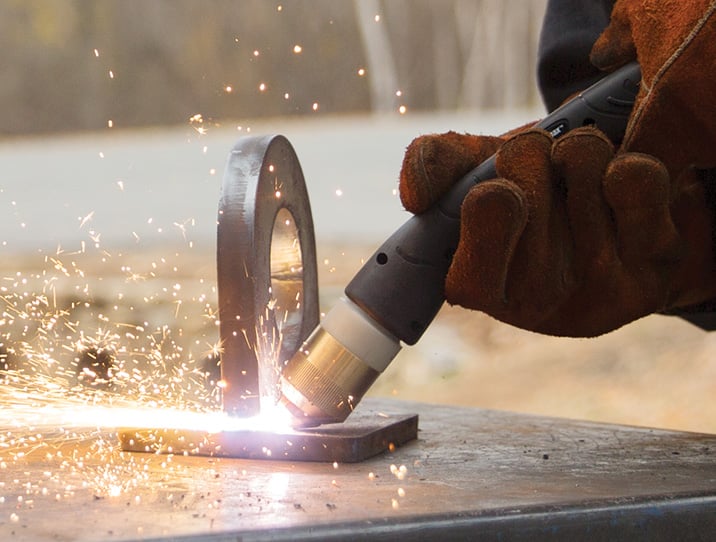
Plasma Cutting Offers Speed, Precision, and Efficiency
Plasma cutting provides a dramatic performance advantage over oxyacetylene and carbon‑arc methods. Plasma systems can operate up to 70% faster than traditional fuel‑based cutting tools: an advantage that compounds significantly in facilities handling large structural components.
Faster cutting is only part of the equation. Plasma produces cleaner, more precise edges that require less secondary grinding or dressing. In shipbuilding, where parts such as bulkheads, stiffeners, crossbeams, decks, hull frames, and pipe sections must fit together with tight tolerances, reduced rework directly increases throughput.
Plasma also integrates well with robotic and mechanized systems. Automated plasma cutting cells are now widely used to process:
-
Hull frame components
-
Stiffeners and ribs
-
Bulkhead and deck openings
-
Brackets, gussets, flanges
-
Pipe sections and penetrations
These automated systems bring consistency to tasks traditionally dependent on specialized manual labor.
Plasma’s efficiency extends beyond speed. Operating costs for plasma cutters are nearly five times lower than oxyacetylene systems because of frequent consumable changes, or complex maintenance cycles. For shipbuilders working with tight margins, predictable and reduced operating costs are a meaningful advantage.
A Safer Alternative to Hazardous Legacy Tools
Speed and efficiency often drive equipment investments, but safety remains the highest priority in every shipyard. Cutting operations are historically associated with some of the most serious injuries in the industry, especially when they involve rework and grinding.
Plasma cutting reduces or eliminates many of these hazards:
-
The clean finish reduces the need for extensive grinding, one of the leading sources of repetitive‑strain injuries.
-
Because the cut is more predictable, operators spend less time correcting errors with additional heat or manual work.
Traditional methods for cutting and gouging expose operators to hazards that can be avoided or reduced:
-
Carbon‑arc gouging produce airborne carbon dust, fumes, and high noise levels that create long‑term health concerns.
-
Both methods demand more physically taxing work and more complex training, making onboarding slower and limiting labor flexibility.
Plasma systems create a safer path forward. They produce far fewer fumes, dramatically reduce noise, and are easier to operate thanks to ergonomic torch design and intuitive controls. These safer working conditions matter greatly for shipyards struggling to recruit the next generation of welders, fitters, and finishers.
Addressing Labor Shortages Through Technology
Shipbuilding requires deep expertise in layout, cutting, fitting, and welding—skills that take years to develop. As experienced tradespeople retire, shipyards find themselves under increasing pressure to maintain production levels with fewer hands.
Plasma cutting helps bridge that gap in several ways:
-
Reduced training time: Plasma systems are easier for new workers to learn compared to oxyfuel or carbon‑arc processes.
-
Less physically demanding: Handheld equipment and cleaner processes make the job more accessible for new entrants.
-
Automation integration: Automated plasma systems help maintain throughput even when staffing levels fluctuate.
By reducing physical strain and simplifying training, plasma cutting helps shipyards retain workers more effectively while improving the overall safety culture of the facility.
Reliable Cutting in an Unpredictable Global Market
The global shipbuilding economy continues to shift under the influence of steel price volatility, rising energy costs, and highly variable international demand. Maintaining competitiveness requires technologies that deliver consistent output with predictable long‑term cost structures.
Hypertherm plasma systems offer high cutting speeds, reduced rework, enhanced safety, and far lower operating expenses compared to legacy cutting and gouging technologies. Whether used in a military shipyard, a commercial fabrication facility, or a smaller regional yard, plasma cutting provides a straightforward path for navigating industry uncertainty with greater confidence.
For shipbuilders facing pressure on every front, plasma technology offers a practical, adaptable, and proven solution that keeps vessels moving from blueprint to water with fewer obstacles along the way.