Metal Service Centers Face Growing Operational Pressures
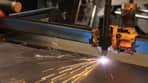
Metal service centers occupy a critical role in the manufacturing supply chain. But today’s centers face more pressure than ever. Rising material costs, unpredictable supply chains, and continued labor shortages collide with escalating customer expectations.
Modern centers do far more than distribute raw plate, bar, tube, or sheet. Many now handle cutting and sizing, bending and beveling, welding, painting, and just‑in‑time production support. But as capabilities expand, so do production demands. Throughput, cost‑per‑part, and operational efficiency must all be managed simultaneously, especially when dealing with a broad mix of alloys and thicknesses.
To meet these evolving challenges, service centers increasingly rely on advanced cutting technologies. Among them, next‑generation plasma cutting stands apart as a practical, versatile, and cost‑efficient solution for high‑mix, high‑demand environments.
Why Plasma Cutting Has Become Essential for Service Centers
Plasma cutting has long been valued for its speed and flexibility, but modern plasma systems offer performance far beyond their earlier generations. Compared with oxyfuel, plasma produces dramatically cleaner edges, precise features, faster cut times, and fewer post‑processing requirements. And unlike laser systems, particularly fiber lasers, plasma equipment is significantly more affordable to purchase, maintain, and operate.
Metal service centers operate on margins that depend heavily on operational uptime, equipment reliability, and cost‑effective material processing. Plasma cutting supports all three. Because plasma is tolerant of surface conditions such as mill scale, rust, or coatings, material does not need to be heavily prepped before cutting. Since many service centers process large volumes of mixed inventory, plasma’s ability to adapt quickly across jobs and materials creates noticeable advantages in turnaround time.
Plasma’s versatility also extends to a wide range of thicknesses. Whether cutting thin sheet or heavy plate, plasma maintains high productivity and requires minimal adjustment. This flexibility makes it especially well‑suited for service centers operating in multiple sectors with varying material specifications.
Five Ways Plasma Cutting Strengthens Metal Service Operations
- Boost Efficiency and Lower Processing Costs
Plasma cutting minimizes waste by producing accurate, consistent cuts across a wide range of metals. Automated and robotic plasma systems further expand this efficiency, enabling service centers to perform complex cutting and beveling operations with repeatability. This is especially valuable for centers offering fabricated subcomponents or specialized services beyond raw material distribution.
The ability to move quickly from job to job with minimal changeover time also allows centers to maintain higher daily throughput. Instead of dedicating large windows of production time to a single material or setup, plasma systems allow rapid shifts that keep schedules fluid and efficient.
- Ease Skilled Labor Shortages with Easier Training and Automation
As manufacturing across North America continues to face a shortage of skilled workers, service centers benefit from tools that accelerate training and reduce dependence on specialized operators. Hypertherm Powermax SYNC systems simplify manual plasma cutting with intuitive controls, SmartSYNC torches, and color‑coded cartridge consumables that eliminate guesswork. New operators can become proficient faster, reducing onboarding time and freeing experienced workers for higher‑value roles.
For centers facing more significant labor constraints, plasma systems integrate easily with robots, cobots and automated cutting tables. Automation reduces operator fatigue, enhances consistency, and enables centers to maintain throughput even during staffing gaps.
- Meet Tight Deadlines with High‑Throughput Cutting
Plasma systems deliver high cutting speed, allowing service centers to process jobs quickly while maintaining quality. Whether running large orders of repeat parts or short‑run custom pieces, plasma’s cutting rates enable centers to hit delivery windows without overtime, overstaffing, or outsourcing.
Reliability also plays a role. Plasma systems are known for predictable performance and steady uptime, which reduces scheduling disruptions and supports consistent turnaround times.
- Stabilize Operations in Volatile Economic Conditions
Economic unpredictability forces service centers to balance fluctuating material costs with customer expectations. Plasma cutting helps offset volatility by reducing operating expenses. Plasma consumables last longer, and consumable changes are simpler, reducing downtime and labor costs associated with tool adjustments.
Compared to laser cutting machines, plasma requires less maintenance and has lower power consumption. This makes it easier for service centers to maintain profitability even as external variables shift.
- Maintain Workflow Consistency Across Shifts and Teams
With simplified settings, quick consumable swaps, and predictable results, plasma systems help ensure consistent output no matter who is running the machine. Service centers often rely on multiple shifts or varying skill levels among operators. Plasma cutting systems, particularly those designed around user‑friendly consumable cartridges and smart controls, minimize performance variations.
The result is a smoother workflow: fewer errors, less rework, and predictable cut quality across the entire production schedule.
Choosing the Right Plasma System for the Job
Three Hypertherm plasma product lines are especially well suited to metal service centers. These 100% duty cycle systems are optimized for different workloads and production environments:
- XPR Plasma Cutting Systems: Designed for high‑volume mechanized cutting and gouging on variable materials where precision and speed are essential. Ideal for centers with cutting tables or i shape cutting lines requiring minimal operator intervention.
- MAXPRO200 Plasma Cutter: Built for continuous, heavy‑duty operation with a 100% duty cycle. Suitable for centers needing both automated and handheld cutting or gouging capabilities.
- Powermax SYNC Series and Powermax125: Highly versatile and portable, offering handheld and mechanized operation. The SmartSYNC torches and single‑piece cartridges for the SYNC series simplify consumable management and reduce operator error.
These systems allow centers to match their technology investment with their workload, staffing, and budget.
Hypertherm Associates is a U.S. based manufacturer of industrial cutting products and software. Its products, including Hypertherm plasma and OMAX waterjet systems, are used by companies around the world to build ships, airplanes, and railcars; construct steel buildings, fabricate heavy equipment, erect wind turbines, and more. In addition to cutting systems, the company creates CNCs and software trusted for performance and reliability that result in increased productivity and profitability for hundreds of thousands of businesses. Founded in 1968, Hypertherm Associates is a 100 percent Associate-owned company, employing approximately 2,000 Associates, with operations and partner representation worldwide. Learn more at www.HyperthermAssociates.com.