Skilled Labor Shortages Challenge Heavy Equipment and Construction Manufacturers
by
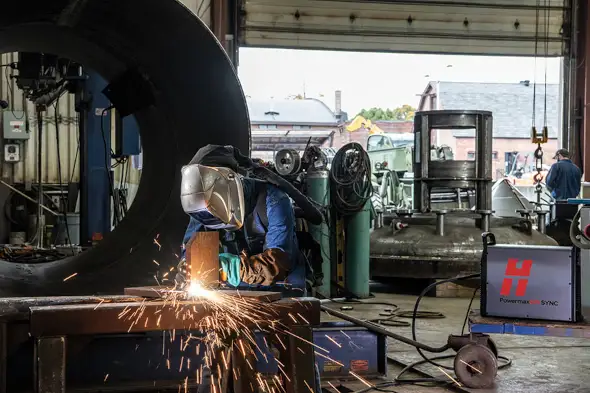
Many industries are struggling to attract and retain skilled labor, but manufacturers of heavy equipment, construction machinery, and excavation systems are feeling the strain more acutely than most. These operations rely heavily on precise, repeatable metal fabrication, and the decline in experienced welders, cutters and assemblers has created real bottlenecks for production.
Compounding the issue is the nature of the market itself. Heavy equipment manufacturing is highly mature, with limited growth driven by innovation and increasing pressure to control costs. As a result, many facilities have continued to rely on legacy tools and techniques that seasoned workers are comfortable with. While familiar, these traditional technologies often contribute to physical strain, inconsistent results and workplace hazards—all of which make it more difficult to bring new workers into the industry.
To address both the labor shortage and the challenges of legacy systems, many manufacturers are now turning toward modern plasma cutting solutions. Hypertherm plasma cutters, in particular, offer a safer, more efficient, and more versatile alternative to the tools typically found in fabrication shops across this sector.
The Limitations and Risks of Traditional Cutting and Gouging Tools
Oxyfuel torches and carbon‑arc cutters have been standard tools in heavy equipment fabrication for decades. They are commonly used for cutting, gouging and beveling the thick, rugged materials found in excavators, dozers, graders and other construction machines. But despite their long history, these technologies introduce several challenges for both operators and plant management.
Physical demands alone can be significant. Oxyfuel torches and carbon‑arc systems are loud, heavy, and notoriously difficult to control. Operators must manage intense heat, sustained vibration and awkward working angles, particularly when addressing the large frames, booms, buckets and chassis components typical of the industry. Over time, this contributes to fatigue, repetitive‑strain injuries, and increased risk of operator error.
Environmental hazards are equally concerning. Oxyfuel systems generate considerable smoke and harmful gases through combustion, while carbon‑arc cutters disperse carbon dust and airborne particulates that can linger throughout the workspace. These byproducts reduce air quality and can contribute to long‑term respiratory concerns. On top of this, fuel tanks used in oxyfuel systems introduce an avoidable explosive risk that requires strict safety procedures.
In short, the cumulative effect of noise, heat, emissions, and physical strain not only impacts experienced workers but also makes fabrication roles less attractive to younger entrants into the workforce.
Plasma Cutting as a Safer, More Modern Alternative
Hypertherm plasma cutters address many of the shortcomings of traditional tools, offering a safer and more welcoming environment for operators of all experience levels. Plasma systems are significantly quieter than oxyfuel and carbon‑arc tools, and they are lighter and easier to handle. This reduces operator fatigue and lowers the physical barriers to learning cutting and gouging tasks.
Because plasma cutters rely on electrically energized gas rather than combustion or carbon electrodes, they produce far fewer hazardous byproducts. There are no waste gases from burning fuel and no carbon dust from arc‑gouging. The absence of explosive gas cylinders also removes one of the most concerning safety risks on a busy shop floor.
Collectively, these benefits help create a cleaner, safer, and more appealing environment. For management, this can translate directly into improved hiring and retention outcomes.
Efficiency Gains Through Faster Cutting and No Preheat Requirements
Many manufacturers initially explore plasma cutting for its safety benefits but quickly recognize its substantial productivity advantages. Plasma cutting is widely known for its high speed and versatility across a broad range of material thicknesses. In fact, plasma systems can deliver cutting speeds up to 70 percent faster than traditional methods.
For beveling, plasma requires no preheat time. This alone saves significant minutes per cut, which compound into hours or days across large production runs typical for heavy equipment components.
Hypertherm’s plasma product lines each serve different industrial needs, but all three deliver faster cut rates and better edge quality than oxyfuel or carbon‑arc systems. The improvement in cut consistency means fewer secondary processes and reduced need for grinding or cleanup. For shops under pressure to increase throughput without increasing labor, these efficiency gains can be transformative.
Automation and Data Integration for Modern Fabrication
Automation has become a crucial strategy for manufacturers facing labor shortages, and plasma cutting integrates seamlessly into automated work cells. Robotic plasma cutting provides consistent, repeatable results for beveling, gouging, contour cutting and surface preparation. Automated cells can also be scaled for both small and large components.
For heavy equipment manufacturers producing high‑volume components like lift arms, housings or bucket assemblies, automation reduces reliance on specialized manual skills while improving throughput and overall consistency.
Hypertherm’s XPR systems add another advantage with MTConnect compatibility. This allows plants to monitor production metrics, track utilization, and identify inefficiencies in real time. With this type of visibility, manufacturers can better anticipate maintenance needs, optimize workflows and reduce unplanned downtime.
Plasma Cutting Advantages Over Fiber Laser Systems
While some equipment manufacturers have experimented with fiber laser cutting systems, plasma remains the more practical option for many applications. Fiber lasers excel in thin‑material cutting but struggle with thicker plate. Heavy equipment fabrication often involves rugged, imperfect materials that have been exposed to weather or storage environments.
Plasma systems cut these surfaces without hesitation. They also deliver superior beveling performance on thicker materials, making them ideal for weld preparation in large structural assemblies. Hypertherm systems produce a smaller heat‑affected zone than many cutting technologies, reducing the risk of warping or material degradation.
A Versatile Solution for Today’s Manufacturing Challenges
As manufacturers search for cost‑effective technologies that reduce physical strain, improve safety, expand automation opportunities and maintain competitive throughput, plasma cutting stands out as a practical and proven solution.
Hypertherm plasma systems offer multiple paths for addressing the skilled labor shortage. Whether through automated cells that compensate for limited staffing or through handheld systems that create a cleaner, safer workplace more attractive to new talent. Additionally, Plasma does so with lower ongoing costs than oxyfuel systems.
At the end of the day, plasma cutting delivers cost savings, user‑friendly operation, reduced waste and a safer working environment. For heavy equipment and construction manufacturers navigating a challenging labor market, those advantages can make a decisive difference.